Underground cooling for AI data centres
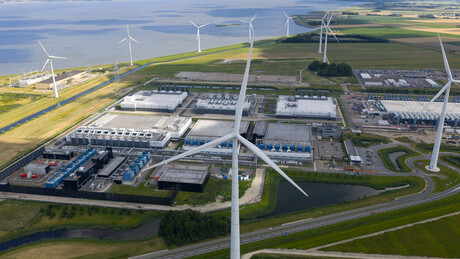
Aquifer-based geothermal systems, known as aquifer thermal energy storage, could help ease the environmental stress stemming from artificial intelligence data centres in the United States. Researchers at the Prairie Research Institute at the University of Illinois Urbana-Champaign are proposing a new way to keep those facilities cool by using the naturally stable underground temperatures and groundwater as a giant natural ‘thermal battery’.
The new study, led by Illinois State Geological Survey researchers Yu-Feng Lin, Andrew Stumpf and postdoctoral researcher Upasana Pandey, proposes a technically feasible and currently underutilised solution for data centre cooling. They found that under ideal conditions, an increase in efficiency would lead to an overall reduction in electricity demand for cooling.
The study findings are published in the journal Groundwater.
“Data centres use large amounts of electricity, and 10 to 40% of that energy can go just to cooling, depending on the design,” Pandey said. “They also consume tremendous volumes of water, often through cooling methods where water is evaporated and effectively lost from the local supply.”
ATES can be integrated into data centres for ‘free or direct’ cooling or to supplement another cooling system, the researchers propose. The concept is simple: water from an underlying aquifer is pumped through subsurface pipes into a data centre. The cool groundwater can be used to absorb heat generated by the data centre via a heat exchanger, and the warm water is returned underground and stored for future use. In the summer, excess heat from cooling data centres can be returned to the same aquifer, stored underground and later reused in winter for heating. In winter, cold groundwater can be stored for use in summer.
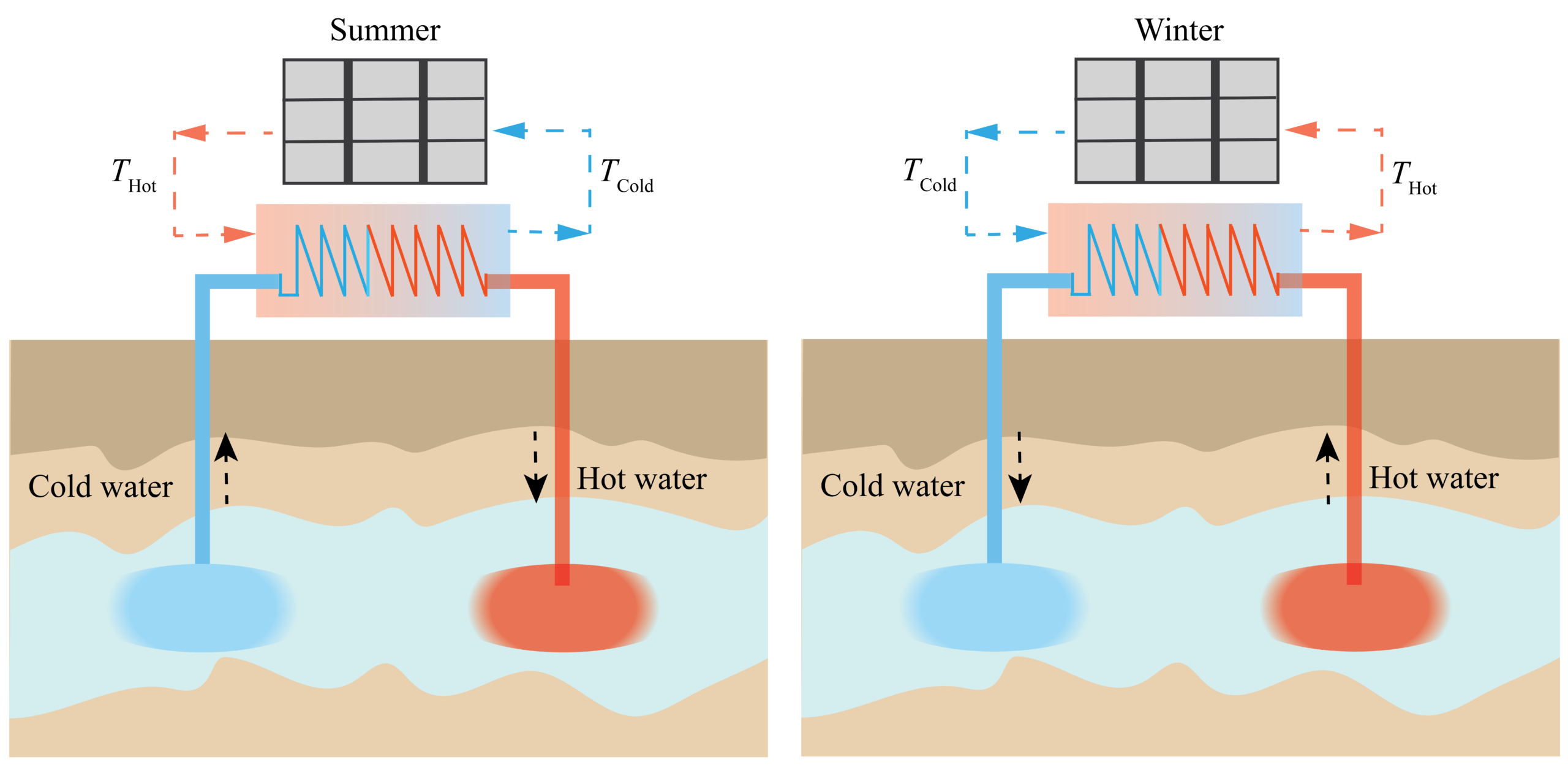
“In places like Illinois where we experience seasonality, and when the subsurface geology is ideal, instead of constantly trying to moderate the outdoor temperatures that swing from 90°F (32°C) in summer to -10°F (-23°C) in winter, we can tap into the Earth’s near-constant temperature,” Stumpf said. “You’re no longer adjusting from 90°F to 70°F (21°C); you’re adjusting from about 55°F (12°C) to 70°F. That’s a huge energy saving.”
According to the team, Illinois is uniquely suited to this kind of system because of three key advantages. First, hot summers and cold winters create pronounced seasonal temperature differences that are ideal for storing heat and cold underground. Second, the state’s prolific aquifers and groundwater make thermal exchange more efficient. Third, glacial deposits and other subsurface materials in central Illinois have thermal properties that respond particularly well when saturated with water. And previous research indicates that the range of subsurface temperature changes should not be an environmental concern.
Importantly, the water used in these systems does not have to be drinking water. The team points to deeper, salty aquifers — some of which are saltier than seawater — or even contaminated groundwater and water-filled abandoned mines as promising sources.
The researchers said the main obstacles are not scientific or technical. Geothermal and aquifer systems have higher upfront costs but lower operating costs over the long term. Many projects are evaluated on 5- to 10-year horizons, rather than the 20- to 40-year lifetimes during which these systems deliver the greatest benefits. As far as workforce and expertise are concerned, the drilling skills already exist in the oil, gas and water well industries.
“Data centres sit at the centre of the water–energy nexus: If you try to reduce energy use, you often use more water, and if you reduce water use, you may need more energy. Our work looks for solutions that address both together,” Lin said. “Water is a magic material in this context because it has high heat capacity and can be a good thermal carrier with flow. That combination is rare, and in groundwater, we can tap those same properties for energy storage.”
Neural networks enable autonomous drone flight control
Scientists have created an autonomous racing drone using little more than a single forward-facing...
New form of magnetism could reshape future chips
Researchers have demonstrated experimental evidence of altermagnetism in a layered material,...
On-chip quantum memory enables longer photon storage times
Researchers have developed a chip-based quantum memory for longer-term photon storage.