
Reducing PCB assembly lead times without increasing risk
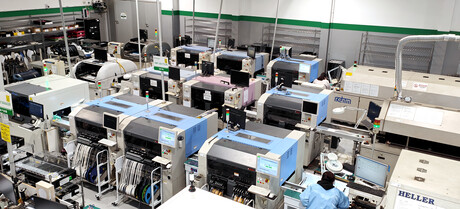
A subcontract manufacturer’s perspective
Across many sectors, product development timelines continue to shorten. Engineers are working to bring new designs to market faster, procurement teams are navigating changing component availability, and manufacturing managers are focused on meeting delivery commitments with consistency.
From a subcontract manufacturing perspective, improving PCB assembly lead times is rarely about simply running production faster. Turnaround performance is influenced by a combination of design decisions, documentation clarity, procurement visibility and manufacturing preparation.
When these areas are aligned, schedules become more predictable.
Shared factors that influence lead time
In a contract assembly environment, production timing is shaped by the quality and completeness of information available at release.
Bill of materials clarity
Accurate manufacturer part numbers, voltage ratings, package types and approved alternates help procurement move efficiently. When documentation is clear, sourcing decisions can be made with confidence and fewer clarification cycles.
Component availability awareness
Some components may be technically suitable but subject to longer lead times in the market. Reviewing availability during the design and planning stages allows teams to make informed choices and avoid unexpected scheduling adjustments.
Manufacturability preparation
Panelisation strategy, stencil design and footprint accuracy all influence how smoothly a product transitions into assembly. Addressing these considerations early supports a more seamless start to production.
These elements are interconnected. Small improvements across each area can collectively shorten overall turnaround.
Collaboration supports speed
In subcontract manufacturing, consistent lead times are usually the result of early communication rather than last-minute acceleration.
Engaging manufacturing input during design review can help identify practical considerations related to assembly processes. This is not about redesigning products, but about ensuring a smooth transfer from engineering to production.
Documenting alternate components in advance provides procurement teams with flexibility when market conditions change. Where appropriate, qualifying secondary parts can reduce exposure to supply constraints without compromising control.
Standardising commonly used components across product families can also improve predictability, particularly for repeat builds or ongoing production programs.
Documentation and preparation
Many schedule variations are administrative rather than technical.
Alignment between Gerber data, pick-and-place files, assembly drawings and test requirements helps reduce preparation time. When documentation is complete and consistent at release, manufacturing teams can prepare tooling, programs and materials with fewer interruptions.
Subcontract manufacturers rely on accurate inputs to maintain delivery commitments. A structured release process benefits all parties in the supply chain.
Procurement coordination and visibility
Procurement plays a central role in realistic lead time planning.
Open communication around component market conditions allows engineering and manufacturing teams to plan accordingly. When kit readiness aligns with scheduled production slots, rescheduling becomes less likely.
For organisations working with Australian subcontract manufacturers, geographic proximity can also support faster clarification when technical questions arise during preparation. Short feedback loops often translate into more efficient transitions from prototype to production.
Speed and reliability together
Reducing lead times should not mean compromising traceability or process control. Accelerated schedules must still allow for verification, inspection and quality assurance.
From a subcontract manufacturing standpoint, improving turnaround is often about strengthening coordination and preparation before assembly begins. When engineering, procurement and manufacturing teams operate with shared visibility, speed and risk management become aligned objectives.
Lead time performance is therefore not owned by one function alone. It is the outcome of collaboration across the product lifecycle.
The benefits of using customised plastic enclosures in medical electronics
Rolec offers customised standard enclosures for medical devices, reducing costs, speeding time to...
Safeguard pocket electronics with smart compact enclosures
Considering ergonomics, functionality, size, weight, durability and aesthetics when selecting...
The engineer's guide to specifying plastic enclosures for IIoT sensors
As Industry 4.0 expands, ROLEC's ASA+PC enclosures offer durable, RF-transparent, IP-rated...


