The benefits of using customised plastic enclosures in medical electronics
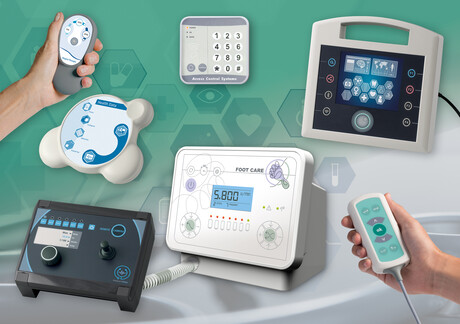
Medical electronic devices demand durable, high-quality enclosures, which can make fully custom housings seem appealing — but they’re often costly. A more efficient option is to start with a standard enclosure and customise it to your requirements, ideally through the original manufacturer for consistent quality and accountability.
Customising a standard enclosure offers key advantages: you start with a proven design, avoid the cost of new tooling, and get to market faster. Plus, with today’s wide range of healthcare-focused housings, your product won’t look generic — especially once it’s tailored to your technical and aesthetic needs.
This approach has improved in recent years, with smarter enclosure designs that require less customisation and higher overall quality. Modern CNC machining, digital printing, and laser marking make modifications faster, speeding up time to market. Additional options include lacquering, decorative foils, special materials (like V 0 or custom colours), EMC shielding and accessory installation.
But specifying the right standard enclosure as your starting point still calls for plenty of consideration; hospitals can be a challenging environment for electronics because equipment is used intensively around the clock.
Regardless of the conditions they face, these devices must not only remain fully functional but also maintain a polished, professional appearance. Outdated or visibly worn equipment does little to inspire confidence in either patients or medical staff.
Strength is essential for any medical device enclosure. Traditionally, ABS has been the material of choice thanks to its impact resistance, dimensional stability, and tensile strength. Polycarbonate (PC), however, offers even greater durability. That’s why enclosures like OKW’s wall-mounted SOLID BOX (IP 66/IP 67) use a PC+ABS blend. This material achieves an IK 08 impact rating (5 joules), equivalent to a 1.7 kg weight dropping from 300 mm.
However, ABS can be discoloured and embrittled by UV rays. A strong alternative is ASA, which replaces the UV-sensitive butadiene rubber in ABS for a more UV-resistant acrylate rubber.
Another option is an ASA+PC blend, which provides additional impact strength. This material is used in enclosures such as CONNECT— an ideal choice for wired remote controls on hospital beds.
Certain medical devices may require stronger ingress protection. While healthcare equipment rarely needs very high ratings such as IP 66 (temporary flooding), IP 67 (shallow immersion), or IP 69K (regular high-pressure jet washing), many applications can benefit from more moderate ratings like IP 54 or IP 65.
IP 54 protects the device from dust that could hinder performance and from splashing water. This rating is optional on enclosures like CARRYTEC — an attaché-style instrument case with a sturdy built-in handle and optional zipped side pockets for probes, sensors, and cables. Crucially, these accessories can stay connected to the main unit, allowing rapid use during medical emergencies.
Meanwhile, IP 65 offers complete protection against dust ingress and can cope with low-pressure (30 kPa) jets of water. It’s standard on wearable enclosures like BODY-CASE, a wristwatch-style ASA housing for bio-feedback sensors and geolocational tracking of patients and clinicians.
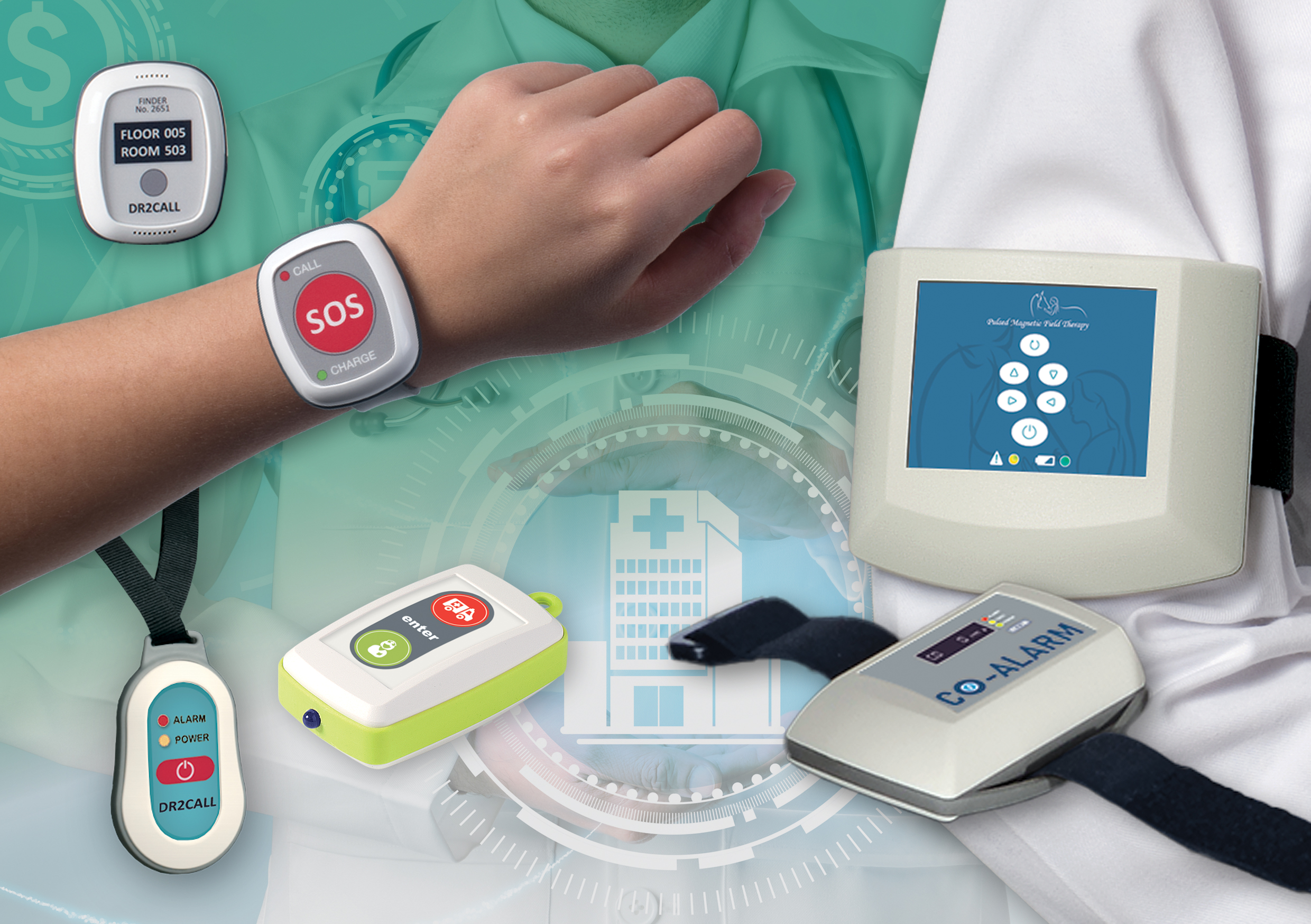
Wearable and handheld enclosures such as BODY-CASE, body-contoured ERGO-CASE (IP 42/IP 54) and award-winning MINITEC underline the necessity of good ergonomics. This matters with any housing but more so when it is in direct contact with the human body for prolonged periods.
Award-winning BLOB (IP 54) is ideal for users with grip issues. All three shapes in this unique range — UNIT, CONTROL and PANEL — are designed to intuitively guide the user’s hands to the controls.
By doing this, they break one of the usual unwritten rules of enclosure design — that standard housings shouldn’t stand out too much. They succeed because they can be oriented in any direction and the generous recessed operating area (especially on PANEL) can hold a large membrane keypad, helping each device feel unique.
Aesthetics play a key role, as the enclosure must reflect the quality of the advanced medical technology inside. Soft contours and curves create a welcoming impression and suggest ease of use even before the device is handled. This modern, rounded styling conveys quality, safety and reliability.
Sharp edges are a potential hazard because they can snag on clothing or gloves. Smooth curves redistribute mechanical stress better than flat edges, and rounded corners are less prone to cracking if the device is dropped. Curves are also simpler to clean because there are fewer dust traps.
Medical device enclosures must also be tamperproof. This can be done with snap together designs, as used in CONNECT wired enclosures, or with housings that open only using a special tool. SMART PANEL wall mounted enclosures follow this approach, featuring sleek screwless assembly and reopening via supplied plastic tools.
Alternatively, where screw assembly is required, then tamper-deterring Torx screws are the solution. They are fitted as standard on many enclosures for healthcare applications, including the aforementioned BODY-CASE.
For larger medical systems, the new COMMUNITEC enclosures add further benefits by combining robust construction with portability. Their ergonomic display angle, spacious interior, integrated handle and protected cable routing make them ideal for diagnostic and monitoring equipment that must be secure, easy to handle and ready for rapid deployment.
The enclosure must also work seamlessly with the controls users interact with; an ergonomic, visually appealing housing needs equally tactile and attractive tuning knobs to match.
Award-winning CONTROL KNOBS and versatile STAR KNOBS demonstrate the modern illuminated designs suited to menu-driven interfaces. Illumination is essential, as medical devices operate around the clock and are often used in dim or darkened wards.
For more information, view the OKW website: https://www.okw.com.au/en/Applications/Medicine-Laboratory-Wellness.htm
Reducing PCB assembly lead times without increasing risk
How subcontract manufacturers can reduce PCB assembly lead times through better documentation,...
Safeguard pocket electronics with smart compact enclosures
Considering ergonomics, functionality, size, weight, durability and aesthetics when selecting...
The engineer's guide to specifying plastic enclosures for IIoT sensors
As Industry 4.0 expands, ROLEC's ASA+PC enclosures offer durable, RF-transparent, IP-rated...