Detecting ‘mouse bite’ defects in semiconductors
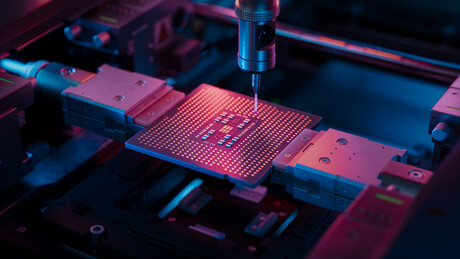
Cornell researchers have used high-resolution 3D imaging to detect the atomic-scale defects in computer chips that can sabotage their performance.
The imaging method, which was the result of a collaboration with Taiwan Semiconductor Manufacturing Company (TSMC) and Advanced Semiconductor Materials (ASM), could touch almost every form of modern electronics, from phones and automobiles to AI data centres and quantum computing.
The research findings have been published in Nature Communications. The lead author is doctoral student Shake Karapetyan.
“Since there’s really no other way you can see the atomic structure of these defects, this is going to be a really important characterisation tool for debugging and fault-finding in computer chips, especially at the development stage,” said David Muller, the Samuel B. Eckert Professor of Engineering in the Cornell Duffield College of Engineering, who led the project.
Tiny defects have been a long-standing challenge for the semiconductor industry, especially now, as the technology has grown increasingly complex while the components have shrunk in size to the atomic scale.
The focus of the study, and the heart of the computer chip itself, is the transistor: the little switch through which electrical current flows via a channel that gets opened and shut by an electrical gate.
“The transistor is like a little pipe for electrons instead of water,” Muller said. “You can imagine, if the walls of the pipe are very rough, it’s going to slow things down. So measuring how rough the walls are and which walls are good and which walls are bad is now even more important.”
Muller has a unique insight into the design of semiconductors. From 1997 to 2003, he worked in the research and development division of Bell Labs — where transistors were invented — exploring the physical limits that dictate just how tiny a transistor could get.
After their introduction in the mid-20th century, transistors were initially built like suburbs: flat and sprawling outward, according to Muller. Over time, as the chips ran out of horizontal real estate, designers started to stack transistors vertically, in three dimensions, like apartment blocks.
“The problem is these 3D structures are smaller than the size of a virus. And these days, it’s a lot smaller. It’s more like a molecule-in-the-cell kind of scale,” Muller said.
A single high-performance chip can now contain billions of transistors. But as they’ve shrunk in size, the technology has become more difficult to troubleshoot.
“These days, a transistor channel can be only about 15 to 18 atoms wide, which is super, super tiny, and they’re extremely intricate,” Karapetyan said. “At this point, it matters where every atom is, and it’s really hard to characterise.”
At Bell Labs, Muller and fellow scientist Glen Wilk, who is now vice president of technology at ASM, tried replacing silicon dioxide — the prevailing gate material, which leaked too much current at small scales — with hafnium oxide. Within a few years, Muller and Wilk departed Bell Labs, but their work continued to reverberate with semiconductor companies, and hafnium oxide soon became the industry standard for computers and mobile phones in the mid-aughts.
“The papers we published on how to use electron microscopes to characterise these materials, I can tell you, a lot of the semiconductor folks had read those very, very carefully,” Muller said. “When we got back into this project, that was very clear. And the microscopy has gone a very long way. Back then, it was like flying biplanes. And now you’ve got jets.”
The jet, in this case, is electron ptychography, a computational imaging method in which an electron microscope pixel array detector (EMPAD) — a technology co-developed by Muller’s group — is used to collect detailed scattering patterns of electrons after they pass through the transistors. By comparing how these patterns change from one scan position to the other, scientists can reconstruct an image with extraordinary clarity. The detector is so precise, it has enabled the highest resolution images in the world, showing atoms in unprecedented detail, as recognised by Guinness World Records.
‘Mouse bites’
More than 25 years after their last joint project, and with the support of TSMC and its Corporate Analytical Laboratories group, Muller’s team and Wilk decided to collaborate again and use the EMPAD to peer inside modern semiconductors.
“You can think of this imaging technique like solving a massive puzzle, both in terms of taking the experimental data and doing the computational reconstruction,” Karapetyan said.
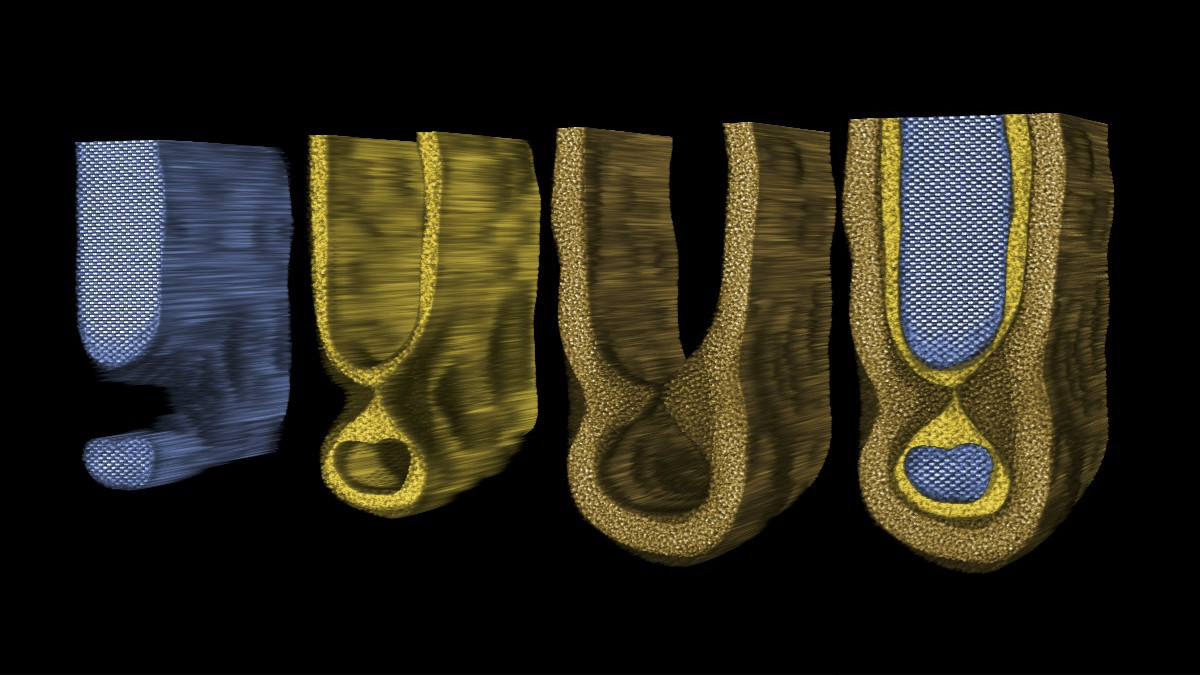
When all the data was collected and reconstructed, and the position of atoms had been tracked, the researchers were able to detect interface roughness in the channels — revealing what Karapetyan termed “mouse bites.” The roughness arose from defects that formed during the optimised growth process. Sample structures, grown at nanoelectronics hub Imec, were the ideal way to test the imaging method.
“Fabrication of modern devices takes hundreds, if not thousands, of steps of chemical etching and deposition and heating, and then every single step does something to your structure,” Karapetyan said. “Before you used to look at projective images to try to figure out what was really going on. Now you have a direct probe to actually see after every single step and have a better grasp of, oh, I put the temperature this high, and then this is what it looks like.”
The new imaging capability could potentially impact almost anything with a modern computer chip, from mobile phones to laptops and data centres, and could be a boon for debugging next-generation technologies such as quantum computers, which require extraordinary structural control of materials that is still not fully understood.
“I think there’s a lot more science we can do now, and a lot more engineering control, having this tool,” Karapetyan said.
New approach brings OLEDs to microchip scale
A new approach uses photolithography to create densely packed OLED pixels, opening a path towards...
Analog memory boosts computing efficiency
Researchers have developed a new computer memory technology, known as electro-thermo-chemical...
New transistor brings high voltage to microchip scale
By harnessing the properties of gallium nitride, EPFL engineers have built a tiny transistor that...