Mechanical computer operates without electricity or chips
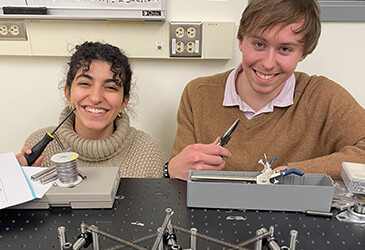
Researchers from St. Olaf College and Syracuse University have built a computer made entirely of mechanical components that can perform simple computations without electricity or batteries.
“We typically think of memory as something in a computer hard drive, or within our brains,” said Joey Paulsen, Associate Professor of Physics at St. Olaf College. “However, many everyday materials retain some kind of memory of their past — for example, rubber can ‘remember’ how far it has been squeezed or stretched in the past. The research team wanted to understand if we could use everyday materials to not only remember movement but also process information — or compute.”
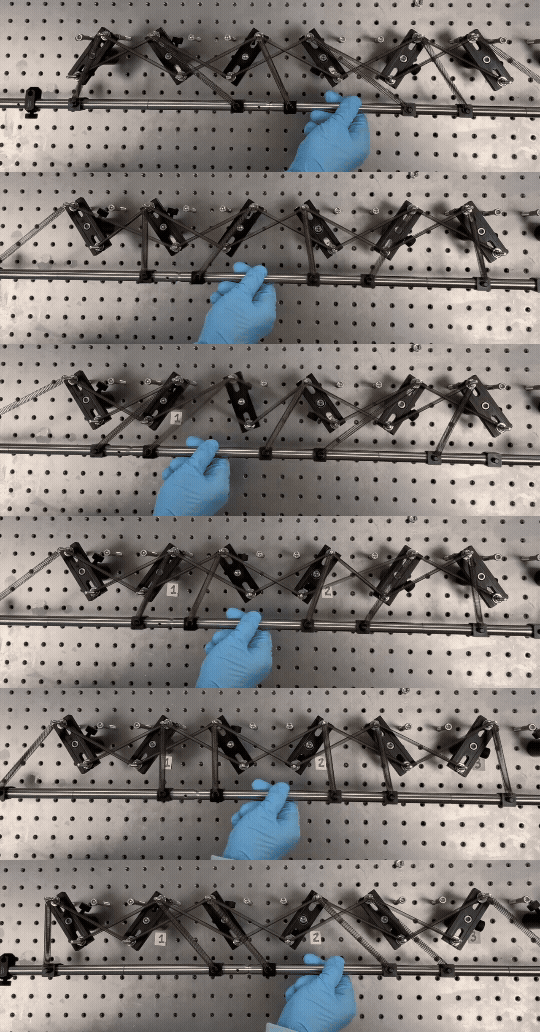
Led by Paulsen, the research team used common materials, such as steel springs and bars, to create three mechanical computers. The first could count how many times it was pulled back and forth. A second distinguishes whether it has been pushed an odd or even number of times. The third can remember if a medium or large amount of force was applied.
“We now have a rational way of building these machines that can perform simple computations without a computer chip or a power source,” Paulsen said.
Key findings from the research include:
- Mechanical computers can perform simple computations without a computer chip or power source.
- Mechanical computers are able to harvest their power from physical force, rather than electricity.
- Proof of design that mechanical computers could be a viable alternative to conventional computers in harsh settings — such as extreme temperatures or exposure to corrosive chemicals — when only simple computations are needed.
“Our results are one step towards designing materials that can sense their environment, make a decision, and then respond,” Paulsen said. “Frequently called smart materials, what we learned could help improve people’s lives by having more responsive artificial limbs or tactile rooms.”
Paulsen recommends that future research on mechanical computers focus on understanding their limitations and scalability. Under his leadership, St. Olaf students are currently testing how the state of one rotor affects its interaction with a second rotor — and potentially a third. This research will continue in the coming months, with opportunities for students to participate through the college’s Collaborative Undergraduate Research and Inquiry (CURI) program.
The research findings have been published in Nature Communications.
Chip stacking technique boosts semiconductor performance
A novel chip stacking technique uses transfer printing to achieve denser semiconductor...
New memristor chips boost AI efficiency
Researchers have developed a brain-inspired memristor chip that could make AI more energy...
Tiny chip adds advanced light sensing directly to cameras
Researchers have developed a tiny camera chip that integrates advanced light sensing, helping...