CSIRO charts path for Australian battery industry growth
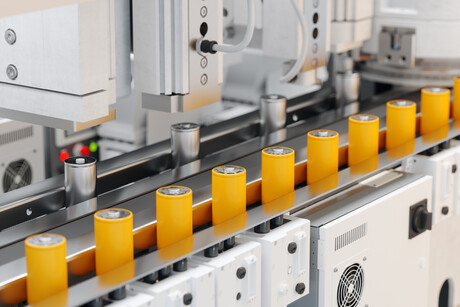
The CSIRO has released a report revealing that Australia has the capacity to become a battery manufacturing powerhouse.
The report identifies where the Australian industry has the skills, materials and expertise to manufacture the components for lithium-ion and emerging sodium-iron batteries. ‘The future of Australian battery manufacturing: Cell cans and current collector foils’ looks beyond Australia’s critical-minerals strengths to question what it would take to turn more of those local resources into the parts that make up every battery cell.
CSIRO Advanced Battery Manufacturing Lead Dr Adam Best said the work combines expertise in advanced manufacturing, battery materials and industrial process assessment, bringing together knowledge of how battery components are made with a practical understanding of what Australian industry can already do.
“That combination is central to the report’s message that Australia’s battery opportunity is not only about what lies in the ground, but what can be made here from it,” Best said.
McKinsey analysis projects the global lithium-ion battery value chain could grow to more than US$400 billion by 2030, while the Australian Government’s National Battery Strategy notes that 96% of the total revenue opportunity is expected to occur downstream of mining. Today, much of that value is captured offshore, with the bulk of our critical minerals being exported. CSIRO’s work shows Australia has a pathway to change that story by building sovereign capability in selected parts of the battery supply chain.
“Bringing more of the value chain onshore would mean Australia could move beyond exporting raw and refined materials alone, towards creating higher-value products, supporting skilled manufacturing jobs and strengthening supply chains for technologies that will underpin the clean energy transition,” Best said.
Rather than attempting to build every part of a battery industry at once, the report points to two promising first steps: making prismatic battery cell cans from Australian aluminium using the impact extrusion process, and producing copper current collector foil using electrolytic deposition.
Battery cell cans are the thin metal cases housing a cell’s active parts. Although apparently simple, they must withstand internal pressure changes and crash loads, remain compatible with electrolyte chemicals, minimise weight and leave maximum space for energy storage — all at low cost. Australia could feasibly make any of the cylindrical, prismatic or ‘blade’ cell formats, although some pathways would require major investment in production of nickel-plated steel and aluminium sheet.
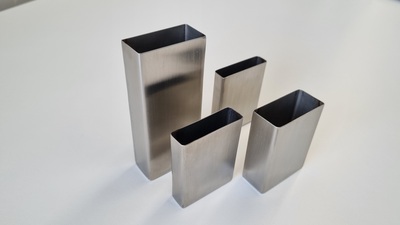
A practical first step for Australia could be producing prismatic battery cans from aluminium. Australia already has a strong aluminium industry and experience manufacturing similar products, including aerosol cans. The report recommends investing in facilities and production equipment tailored to making battery cans locally.
A battery’s current collector foils support the cell’s electrochemical core and carry current to its terminals. The copper foil on a lithium-ion battery’s negative electrode is typically just six microns thick — about one-tenth the thickness of a human hair — while the aluminium foil on the other side is about twice as thick. These highly engineered components are critical to battery performance, safety and production.
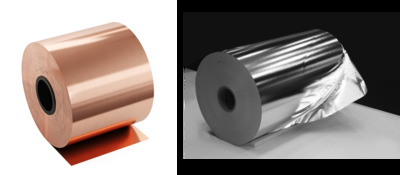
The report identifies electrolytically deposited copper foil as a viable first priority for establishing a local lithium-ion battery manufacturing sector. It would build on Australia’s copper production and refining capability, can be scaled by adding production cells over time, and is less capital-intensive than rolling routes.
“Australia is already a critical minerals powerhouse, but the next opportunity is to capture more value through manufacturing. By focusing on practical, technically achievable steps, Australia can build capability, support industry growth and contribute to more resilient battery supply chains both domestically and internationally,” Best said.
Polymer binder advances sustainable battery design
A new, fluorine-free battery binder could make lithium-ion batteries more environmentally...
Bypassing weak cells could extend EV battery pack lifespan
Reconfigurable EV battery packs could last longer by bypassing weaker cells, with modelling...
Perovskite solar cells take flight for testing in space
Next-gen perovskite solar cells are heading into space aboard the CRIMSON-1 satellite, where...