Electrochemical bath revives spent batteries
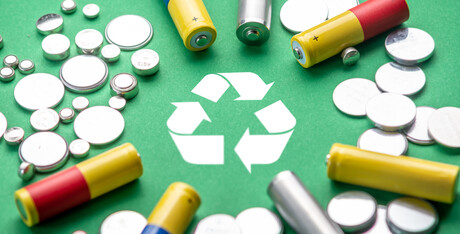
The critical minerals that power lithium-ion batteries are in high demand and short supply. To address this challenge, Cornell researchers have now developed a more efficient and cost-effective way to recover almost the full life of these batteries after they are spent.
By using an electrochemical solution to regenerate their electrodes, the recycled batteries can regain up to 95% of their original power and last longer when reused, the researchers demonstrated.
The process could also reduce current recycling costs by 56% and would be more environmentally friendly than current methods.
The findings were published in Energy and Environmental Science. The study’s lead author is postdoctoral researcher Kiwon Kim.
For decades, the battery industry has relied on a linear ‘take-make-dispose’ approach that concludes with spent batteries buried in landfills, where their toxins can leak into the surrounding environment or lead to fires, according to Vibha Kalra, the Fred H. Rhodes Professor of Chemical Engineering in the Cornell Duffield College of Engineering, who led the project.
But there is also a strain on the supply chain to consider.
“When these lithium-ion batteries came about, nobody was thinking about how these minerals are limited on the Earth’s crust, and you cannot make them forever,” Kalra said. “In recent years, people are realising you can’t just keep making batteries, because you don’t have enough material.”
The traditional method for recycling lithium-ion batteries, she said, is one of brute force: the batteries are either smelted at high temperatures, ie, pyrometallurgy, producing an alloy and slag from which valuable metals are later recovered, or crushed and shredded into a powdery black mass that is processed via hydrometallurgy that uses harsh acids to recover critical elements. The components then have to be completely resynthesised and refabricated — a costly and time-intensive procedure that results in lengthening the ‘circularity loop’ by which recycled resources are kept in the system, instead of in landfills.
Kalra’s team developed a method called direct electrode-to-electrode regeneration (DEER) in which a spent battery’s individual electrodes are removed while still intact and attached to the current collector and are placed in a separate cell that contains an electrochemical solution: 1,3-dimethyl-2-imidazolidinone. The solution dissolves the thick insulating layer, known as the solid electrolyte interphase, that gradually builds up between the cathode and anode as the battery gets cycled, gradually diminishing its capacity over time.
“We repair them, as-is, without shredding or powdering them, and then put them back into a new battery,” Kalra said. “The dissolution is basically what helps the battery recover its capacity. It shows 95% recovery, so we are shortening the circularity loop immensely.”
Kalra and Kim collaborated with Shuwen Yue, assistant professor in the R.F. Smith School of Chemical and Biomolecular Engineering and a co-author of the paper, who helped them better understand the solvation dynamics as the interphase gets dissolved out. Then, working with open-source software developed by their research collaborators at Argonne National Laboratory’s ReCell Centre, the team performed techno-economic and environmental impact analyses to determine the potential impact of DEER.
The analysis showed it would cut the cost of recycled cell manufacturing by 56% and would reduce harmful air pollutants and water use compared to the pyro- and hydro-based processes.
The next step will be to demonstrate DEER on industrial batteries as well as targeting other forms of battery degradation, such as lithium loss.
“Right now, the spent batteries we are treating have 70–80% state of health, which is typical in electric vehicle applications, so we can expand that window if we can address some of these other degradation mechanisms,” Kalra said.
Bypassing weak cells could extend EV battery pack lifespan
Reconfigurable EV battery packs could last longer by bypassing weaker cells, with modelling...
Perovskite solar cells take flight for testing in space
Next-gen perovskite solar cells are heading into space aboard the CRIMSON-1 satellite, where...
Perovskite thin film powers devices using indoor light
Researchers have improved perovskite thin films, helping indoor photovoltaics capture light while...