
Perovskite solar cells take flight for testing in space
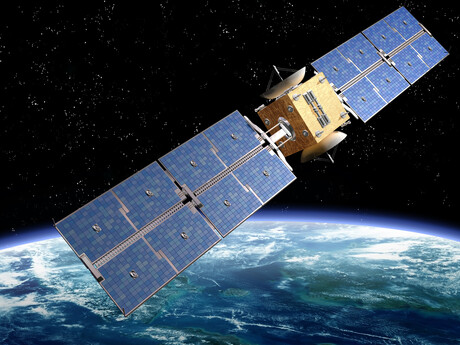
Nanyang Technological University, Singapore (NTU Singapore) has launched a satellite carrying perovskite solar cells developed for testing in space, together with artificial intelligence capabilities designed to analyse images directly in orbit.
The CRIMSON-1 satellite will gather real-world performance data on lightweight perovskite solar cells in the harsh environment of space, while also testing technologies that could help future spacecraft analyse raw data before beaming it back to Earth.
CRIMSON-1 is NTU’s 14th satellite launched into space. It was launched aboard a SpaceX Falcon 9 rocket on the Transporter-18 rideshare mission from Vandenberg Space Force Base in California, United States, on 1 October 2026.
Scientists from the NTU Satellite Research Centre (SaRC) worked with launch integrator Exolaunch, which provided launch capacity, mission management, satellite integrator and deployment services, to deploy the satellite into space using its EXOpod Nova system.
Ngiam Le Na, Chief Executive of the National Space Agency of Singapore, said the perovskite solar cells will provide an advantage over conventional solar panels, as their thin, lightweight properties make them well-suited for space applications, where every gram matters.
“Missions like CRIMSON-1 represent a pathway for homegrown innovations to gain flight heritage needed to progress towards commercial application. By giving our researchers and companies the opportunity to test and validate their technologies in orbit, we are helping them build the credibility and track record needed to compete in the global space economy,” Le Na said.
NTU Deputy President and Provost Professor Christian Wolfrum said NTU brings satellite engineering, artificial intelligence and advanced materials research together in one place. “The satellite was developed with local industry partners, so each mission builds capability not just in the university but across Singapore’s space sector,” Wolfrum said.
Testing pioneering perovskite solar cells in orbit
CRIMSON-1 will test several next-generation perovskite solar cells developed by NTU researchers and Singfilm Solar, a deep-tech spin-off from National University of Singapore (NUS).
Perovskites are a class of next-generation materials that can be used to make lightweight solar cells with high power-generation efficiency using commonly available materials.
NTU has been a pioneer in perovskite solar cell research since 2013, when a team showed that electrical charges could travel unusually long distances through perovskite materials, helping to explain their high solar-cell efficiency.
Since then, NTU researchers have scaled up perovskite solar cells towards module sizes suitable for industry applications and developed prototypes aimed at improving their performance and stability.
However, for space applications, new solar technologies must prove that they can survive the physical stresses of a rocket launch and endure the harsh conditions of space while generating consistent power.
CRIMSON-1 will test the cells’ physical durability and efficiency after their journey from the ground into space and measure how much electrical power they generate in Low Earth Orbit.
NUS Assistant Professor Hou Yi, Founder of Singfilm Solar, said the mission will provide valuable data on how the technology performs in the harsh environment of space, helping to advance lightweight solar power for future satellites and explore its application for space-based AI data centres. “This mission marks the first spaceflight of a flexible perovskite solar module built on ultrathin glass and the first deployment of a Singapore-made solar module in orbit,” Yi said.
Developing AI for future satellite operations
Another CRIMSON-1 experiment will test edge AI computing, where data collected by a satellite is analysed directly on board instead of transmitting all the raw images back to Earth, which takes time and bandwidth.
During the mission, the satellite will run AI-based image-processing tasks in orbit while the researchers study how well its computing system manages heat and power consumption under heavy workloads.
Analysing images in space could allow future satellites to identify useful information before transmitting data to Earth, reducing the amount of raw data sent through limited satellite communications links.
Perovskite thin film powers devices using indoor light
Researchers have improved perovskite thin films, helping indoor photovoltaics capture light while...
Controlling defects helps improve solar cell performance
UNSW Sydney researchers have uncovered a new way to improve a promising next-generation solar...
Hybrid system integrates power, heating and cooling
A novel hybrid energy system combines electricity generation, heating and cooling under one roof,...


