Amping up battery insights in the tropics
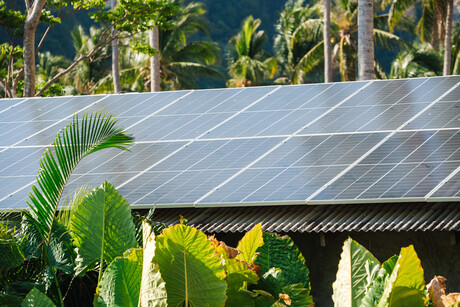
Malaysia has set an ambitious target to increase its renewable energy share to 70% by 2050. Meeting this goal will require investment in reliable, safe and cost-effective energy storage solutions — such as battery energy storage systems — to manage intermittency, maintain grid stability and address peak demand challenges, particularly for solar generation.
Battery energy storage systems behave differently in hot and humid climates, yet most available research has been developed for cooler regions. For Malaysia, this gap affects how batteries are selected, designed and managed in conditions where heat and humidity significantly influence performance, safety and lifespan.
Recognising the need for climate-specific evidence, Malaysia’s Sustainable Energy Development Authority (SEDA) and CSIRO undertook a joint study — supported by the Australian Government’s Partnerships for infrastructure (P4I) initiative — to assess how different battery chemistries perform under Malaysia’s tropical conditions.
The joint report reviews six battery chemistries. It provides a structured overview of factors that shape how battery energy storage systems operate in tropical environments and establishes a clear baseline for future planning and deployment across residential, commercial and industrial applications.
CSIRO's Dr Mahathir Almashor, Senior Engineer, Energy Systems Program, said, “This study was shaped by both scientific interest and practical relevance. Most international battery research comes from cooler regions including Japan, China, Europe and the United States. This creates a knowledge gap for countries operating in hot and humid climates. Malaysia’s conditions, together with SEDA’s strong interest in the topic, made it a natural partner. The findings are also highly relevant for northern Australia, where similar tropical environments exist.”
The study highlights several factors that shape how storage systems perform in Malaysia’s climate.
“Consistently high temperatures can accelerate side reactions leading to shorter life and higher risk of thermal runaway. However, Malaysia’s relatively stable temperature range offers more favourable conditions for most battery chemistries,” Almashor said.
“Malaysia’s stable temperature range (22–32°C) also avoids the deep seasonal temperature swings that accelerate degradation in colder regions.”
However, consistently high humidity — often reaching 80–90% — remains a significant challenge. “Humidity can accelerate corrosion and contribute to failures, even when battery energy storage systems are housed in climate-controlled enclosures. This risk is exacerbated by the lack of dedicated studies to the effects of humidity and salinity on specific chemistries. This report is a strong start in highlighting this research gap and its associated challenges,” Almashor said.
Saiful Hakim Abdul Rahman, Director, Strategic Planning, SEDA, emphasised that these findings reinforce the need for climate-appropriate system design, including protective enclosures, ventilation and thermal management tailored to Malaysian conditions.
“This research will support several policy processes, including the development of standards, guidelines and frameworks for safe, economically sound battery energy storage systems deployment,” Rahman said.
Both SEDA and CSIRO see opportunities to extend the work. The researchers also expressed interest in exploring reverse power flow (from consumer to grid), drawing on Australian experience to support more flexible integration of distributed energy resources (DER) such as rooftop solar.
CSIRO, meanwhile, noted that the study has already attracted interest from other South-East Asian technical agencies and research partners beyond Malaysia, reflecting a wider regional appetite for evidence on tropical storage.
“There is interest in exploring a second phase of work, potentially extending the research to other South-East Asian contexts,” Almashor said.
As more countries consider large-scale storage in tropical environments, the knowledge generated through partnerships like this can form part of a common reference point for future projects and regional planning.
Acumentrics AHB1002 rugged 2U half-rack UPS system
The rugged 2U half-rack UPS system is engineered to perform in a range of conditions, with dual...
Multicomp Pro MP013877 photovoltaic/solar connector
The MP013877 photovoltaic/solar connector enables secure connections between solar panels and...
Emerson SolaHD S4KD uninterruptible power supplies
The Emerson SolaHD S4KD uninterruptible power supplies feature a rugged metal housing and a...