Molecular Velcro coating boosts solar cell efficiency
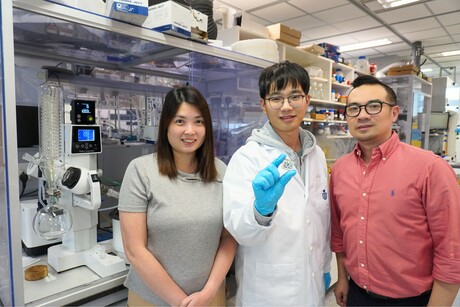
Researchers from The Hong Kong University of Science and Technology (HKUST) have developed a robust coating layer that enhances the durability of perovskite solar cells. In tests simulating midday sunlight at 85°C, the solar cells reportedly retained over 95% of their initial efficiency after more than 1100 hours of continuous operation.
“To the best of our knowledge, this represents the highest certified stabilised efficiency reported in a peer-reviewed publication for inverted perovskite solar cells with an active area of around 1 cm2,” said Assistant Professor Lin Yen-Hung, from the Department of Electronic and Computer Engineering at HKUST.
The research findings, published in the journal Science, demonstrate the real-world application of perovskite cells in outdoor environments, paving the way for durable and high-efficiency solar technology.
Perovskite solar cells are recognised for their high efficiency and low manufacturing costs; however, their limited long-term stability has hindered their widespread adoption. A common strategy to address this challenge is to coat three-dimensional (3D) perovskite absorbers with a thin low-dimensional (LD) perovskite layer to passivate surface defects and boost voltage. However, conventional LD layers, typically composed of monovalent ammonium salts, bind weakly to the perovskite lattice and degrade under heat and illumination, leading to rapid performance decline.
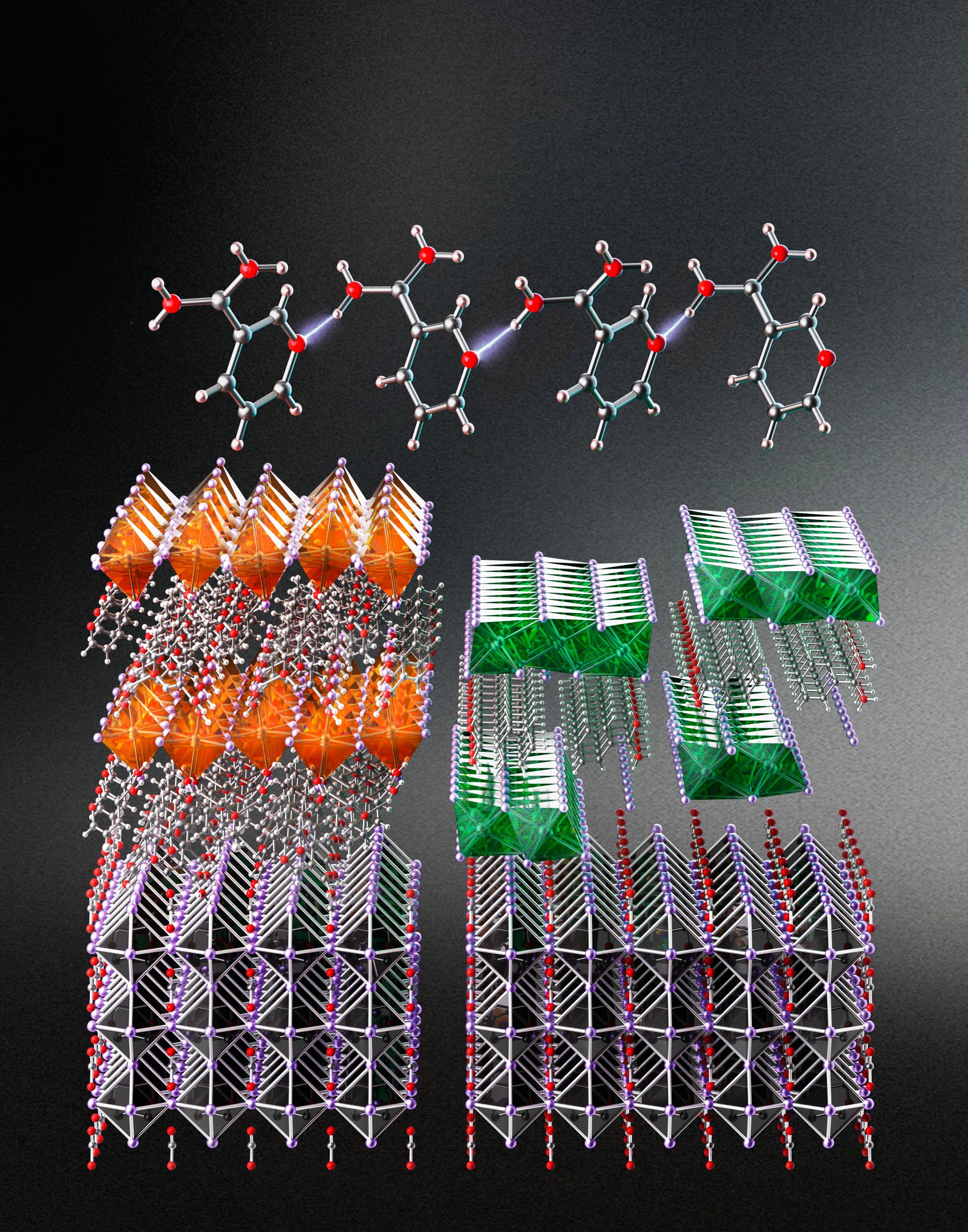
To address this, Dr Chang Xiao-Ming, a postdoctoral fellow of the Department of Electronic and Computer Engineering at HKUST, developed a new approach using multivalent amidinium ligands. These ligands anchor to the perovskite surface at multiple points via two nitrogen sites in their headgroup, functioning like ‘molecular Velcro’. Such a ‘multi-point grip’ ensures that the LD layer remains stable under operating conditions.
“Traditional ammonium–halide molecules diffuse into the perovskite bulk at high temperatures, causing breakdown or reaction with the organic ion formamidinium. This weakens the protective LD layer and accelerates degradation. In contrast, our multivalent amidinium ligands have a flat molecular shape and a resonance-stabilised charge distribution, forming stronger hydrogen bonds with halide ions and resisting degradation,” Chang said.
Researchers used operando hyperspectral imaging to map pixel-by-pixel under open-circuit, maximum-power-point and short-circuit operation. In the accelerated aging test, devices with the ‘molecular Velcro’ interface showed almost unchanged photoluminescence patterns and spectra, indicating a stable interface and intact perovskite layer.
To assess the durability of these devices, the team adhered to the International Summit on Organic Photovoltaic Stability (ISOS) protocol, which is widely used to compare perovskite solar cell lifetimes.
Smarter charging boosts lithium–tellurium battery performance
An optimised charging strategy could improve lithium–tellurium battery performance by...
Flexible porous material may improve solid-state batteries
A flexible porous material could address contact issues in solid-state batteries, potentially...
X-ray spectroscopy could enable longer-lasting batteries
X-ray spectroscopy and computer modelling offer a faster way to predict chemical interactions and...