Scandium insights could extend sodium-ion battery life
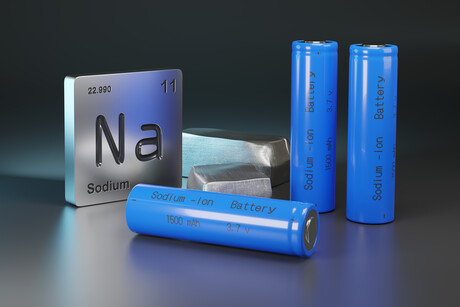
Sodium-ion batteries (SIBs) are potential alternatives to lithium-ion batteries, due to the greater abundance of sodium in the Earth’s crust, compared to lithium. SIBs also offer better safety and low-temperature performance; they are also being commercialised for applications ranging from portable electronics to electric vehicles.
Among the various cathode materials under development, layered sodium nickel manganese oxides (Nax[Ni,Mn]O2) have emerged as promising candidates. Specifically, the O3 polytype of Na[Ni1/2Mn1/2]O2, as it contains stoichiometric Na+ in a pristine state and delivers a relatively large reversible capacity. However, it suffers from capacity fading due to large volume changes that occur during the charging and discharging process. To address this issue, previous studies have explored hetero-metal substitution. Among the available candidates, sodium ions have shown promise in improving cycling performance; however, the exact mechanisms behind these improvements remain underexplored.
Now, a team of researchers led by Professor Shinichi Komaba and Associate Professor Shinichi Kumakura from the Department of Applied Chemistry at Tokyo University of Science has investigated how the incorporation of scandium ions into O3-Na[Ni1/2Mn1/2]O2 (NNMO) affects its crystal structure and electrode properties. The research findings have been published in the journal Small.
The researchers utilised two approaches to study the effects of incorporating scandium ions: doping and surface coating. Kumakura said the scandium ions can be incorporated into either the bulk structure or through an external coating. Both can improve the cycling performance, but the underlying mechanisms have not been elucidated.
“In this study, we explored how scandium improves battery performance of SIBs through both doping and coating, clarifying their distinct mechanisms,” Kumakura said.
The researchers synthesised Sc-doped samples of NNMO, termed NNMSOx, where ‘x’ denotes the percentage of Sc doping, through a bulk doping method. The study focused on NNMSO8, due to its superior cycling performance. The team also prepared samples with Sc coating, where NNMO particles underwent a wet process using a scandium isopropoxide solution, followed by annealing at 800°C, creating NNMO-SC800.
The team then evaluated the electrochemical properties of the synthesised samples using coin-type aprotic Na cells. The results showed that both doping and coating improved the charging/discharging durability of the cells, and enhanced capacity retention after 100 cycles.
This improved performance was attributed to suppression of side reactions and bulk stabilisation or the structure due to the doping of scandium ions. In addition, NNMSO8 demonstrated a smoother charging/discharging curve compared to NNMO. The researchers found that this was due to the suppression of Na+/vacancy ordering due to the substitution of scandium ions. In contrast, NNMO-SC800 did not show any noticeable change in charging/discharging curve shape, thereby suggesting that SC3+ is present mainly at the surface. Both modified materials also demonstrated improved rate capability.
Overall, the researchers found that coating enhances cycling stability but does not prevent the loss of crystallinity during long-term cycling, while doping suppresses bulk degradation but does not fully mitigate capacity fading.
“Our findings show that a synergistic combination of bulk doping and surface coating is a promising strategy to improve performance of SIBs. This will help extend the lifespan of SIBs and consequently widen their practical application,” Komaba said.
While Sc serves as an ideal model system to demonstrate these distinct structural mechanisms, its cost and availability mean that the team’s next step will be applying these insights to more abundant, cost-effective elements suitable for commercial scaling. This study offers valuable design principles for developing longer-lasting, high-performance SIBs.
Smarter charging boosts lithium–tellurium battery performance
An optimised charging strategy could improve lithium–tellurium battery performance by...
Flexible porous material may improve solid-state batteries
A flexible porous material could address contact issues in solid-state batteries, potentially...
X-ray spectroscopy could enable longer-lasting batteries
X-ray spectroscopy and computer modelling offer a faster way to predict chemical interactions and...