Graphene hydrogel improves wearable biosensors
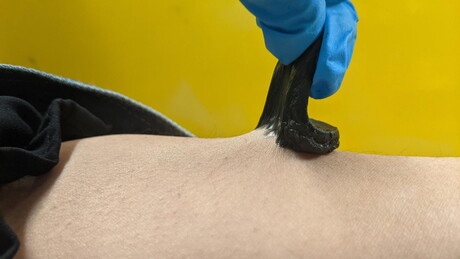
Biosensors have revolutionised home health care over the last two decades, giving people with chronic health conditions the information and assurance they need to maintain an active lifestyle. But even the best sensors are limited by their ability to sustain skin contact through the rigours of physical activity.
Researchers from Drexel University and Penn State University took on the challenge of improving the hydrogel material used in biosensors. The researchers reported a new formula for making a gelatinous substrate that is versatile, durable and adhesive enough to make a stronger connection.
According to the researchers, in addition to regular movement, like flexing or stretching, surface obstructions, such as moisture, grease or hair are the biggest impediments to biosensors remaining affixed to the body and picking up the biological signals they’re designed to detect. Reported in the journal Science Advances, their hydrogel is formulated to adhere to skin through hair and sweat and keep its hold through physical activity.
“The ultimate goal of a biosensor is to be so reliable and comfortable that the wearer can go about their life without constantly noticing it’s there,” said Abu Musa Abdullah, PhD, a post-doctoral researcher of mechanical engineering and mechanics in Drexel’s Nick Howley College of Engineering and Computing, who was one of the leaders of the research. “Taking this into consideration, we devised a formula for a hydrogel that can be printed in any shape or size and is adhesive enough to cling to skin even when it’s sweaty or hairy, and durable enough to be reused.”
Their innovation was made possible by tailoring the mixture of polymers and additives that form the gel so that it behaved in a few very specific ways.
The team wanted its hydrogel sensors to be easily applied to any area of the body. This meant being able to produce them in bespoke shapes and sizes. To achieve this design flexibility, the researchers built in a chemical mechanism — driven by the mixture’s pH — to delay the gel’s congealing process.
By adjusting the solution’s pH, the researchers could trigger formation of the gel when it is inside a syringe. This allows it to be smoothly dispensed onto the skin and to create a sensor that quickly conforms to the area where it has been applied.
“This manufacturing flexibility enables us to fabricate customised electrodes in different shapes and patterns that conform closely to specific body locations or individual users,” Abdullah said. “Rather than enabling an entirely new type of physiological measurement, our hydrogel makes existing measurements more reliable under challenging real-world conditions.”
To improve the durability and enhance electrical conductivity of the hydrogel — making it a more potent sensor — the researchers added flakes of graphene-based nanomaterial to the mixture. These flakes, called laser induced graphene and reduced graphene oxide, formed a porous network within the hydrogel, which also allows sweat to permeate the gel without creating build-up that could interfere with or dislodge the sensor.
Lastly, the team included polydopamine, a widely used polymer ‘bio glue’ that mimics the adhesive proteins found in muscle tissue — making it an excellent adhesive for attaching things to biological tissues. The bio glue compound served not only to firmly secure the sensors to skin, but also to ensure they stayed attached through physical activity and sweating.
In preliminary testing, the team found that their optimisations produced hydrogels that are about as soft as human tissue, can stretch to 80 times their original size and are durable enough to be peeled off and reapplied dozens of times without degrading their performance. It also strongly adhered skin to objects ranging from copper and steel to glass and rubber, which demonstrates its potential for use in a range of biomedical sensing technology.
Hydrogel electrocardiogram sensors, placed on the wrist and chest, maintained a strong signal connection through bending and stretching. And electro-oculography sensors returned similar results through a series of blinking and eye movement exercises.
To test the hydrogel’s performance as a biosensor in a real-world application, the team devised an array to capture multiple physiological hallmarks of anxiety. Placing hydrogel sensors on the eyelid, palm and wrist of a test subject, the team was able to monitor blinking, sweat and heart rate as the subject was alternately exposed to relaxing music and irritating sounds.
The team repeated the experiment with a volunteer, self-described as an arachnophobe, who they exposed to videos of spiders. The sensors were able to continually record data during the experiment as the participant’s anxiety mounted with the onset of a fight-or-flight response, including an increase in sweating and eye blinking.
“Monitoring the body’s electrical signals usually involves attaching multiple types of electrodes and several different sensors to the skin, which can take time to set up and may be uncomfortable to wear,” Abdullah said. “Our hydrogel combines these functions into one soft, skin-like material that is easier to apply, more comfortable for the wearer and better able to maintain close contact with the skin, helping produce more stable signals even during everyday movement.”
Although these findings are a proof-of-concept, the team anticipates continuing the work to optimise the hydrogel for specific uses. Its versatility presents opportunities for concurrent monitoring of a number of biosignals, from heart rate and temperature to blinking and other muscle movement. The researchers suggest that the gel could also be used in exercise-monitoring sensors for physical training and rehabilitation.
Paint-on electrodes enable smarter wearable sensors
A new conductive ink enables paint-on electrodes that adapt to the skin, enhancing wearable...
Battery-free smart home sensors developed using metal tags
Researchers at Georgia Tech have developed battery-free ultrasonic sensors that use passive tags...
Ultrasound wristband enables precise robotic hand control
By moving their hands and fingers, users can direct a robot to play piano or shoot a basketball,...