Perovskite quantum wells extend spin lifetime at room temp
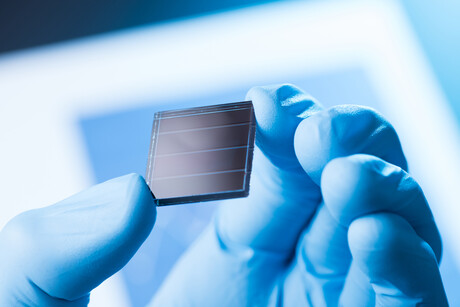
A team of researchers from the Hong Kong University of Science and Technology (HKUST) has developed perovskite chiral multiple quantum wells systems that maintain spin polarisation approximately 300 times longer at room temperature, marking a significant development in preserving spin information for optoelectronic technologies.
The research findings have opened new possibilities for future quantum technologies and next-generation spin-based applications. The study has been published in the journal Nature Photonics.
Semiconductors underpin modern optoelectronic devices, yet the industry continues to face challenges in improving processing speed while reducing energy consumption. To overcome these challenges, researchers are exploring new approaches, such as spin-based technologies. However, manipulating spin states at room temperature is difficult due to the rapid spin decoherence process.
To address these challenges, the KHUST researchers, led by Professor Lu Haipeng from the Department of Chemistry, have developed a novel perovskite chiral multiple quantum-well system that enables an efficient ‘spin cascade’ process.
Using a two-step seed-assisted crystallisation approach, the team constructed well-oriented quantum wells with varying widths and continuous intrinsic chirality across two-dimensional (n=1), quasi-two-dimensional (n=2, 3, 4, …) and three-dimensional (n=∞) perovskite phases.
The structurally coupled quantum wells establish an energy-gradient and fully chiral environment, generating a series of intermediate spin-polarised states. This unique architecture promotes efficient spin transfer across successive chiral quantum wells while reducing interfacial spin losses and suppressing spin relaxation within the bulk phases. As a result, spin polarisation can persist for approximately 5 nanoseconds at room temperature, overcoming the conventional limitation that long-lived spin polarisation is typically achievable only at ultra-low temperatures.
The prolonged spin polarisation enables circularly polarised luminescence with a luminescence dissymmetry factor (glum) of up to 1.4 x 10⁻². The materials also demonstrate spin-dependent charge transport with a polarisation degree exceeding 80%. Building on these properties, the team developed proof-of-concept applications including efficient X-ray-triggered dissymmetric photopolymerisation and high-performance circularly polarised light detection, highlighting the material’s potential for asymmetric photocatalysis and advanced optical sensing.
Reflecting on the significance of the work, Haipeng said, “Our study demonstrates that introducing intrinsic chirality across successive quantum-well phases, together with a graded energy landscape, enables efficient spin transfer and prolonged spin polarisation in perovskite semiconductors. This provides a promising platform for spin accumulation and the development of advanced chiroptical and spintronic devices.”
Novel method to reduce metal waste in manufacturing
A new process could separate mixed metal powders for reuse, helping reduce material waste in...
Biohybrid mesh could power implantable electronics
A flexible biohybrid mesh integrates living human cells with piezoelectric materials to harvest...
Electrical method could help detect extraterrestrial life
An AI-powered nanogap method can distinguish amino-acid forms, opening a path to compact...