2019 Nobel Prize in Chemistry awarded for Li-ion batteries
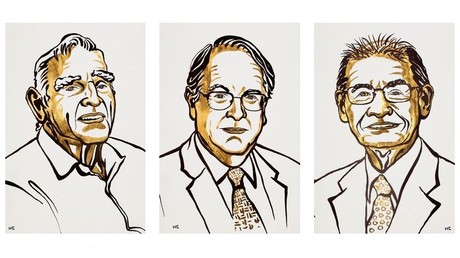
The Royal Swedish Academy of Sciences has awarded the 2019 Nobel Prize in Chemistry to M Stanley Whittingham, John B Goodenough and Akira Yoshino for the development of lithium-ion batteries — lightweight, rechargeable and powerful devices that are now used in everything from mobile phones to laptops and electric vehicles.
The foundation of the lithium-ion battery was laid during the oil crisis in the 1970s, when Whittingham was working on developing methods that could lead to fossil fuel-free energy technologies. He started to research superconductors and discovered an extremely energy-rich material, which he used to create an innovative cathode in a lithium battery. This was made from titanium disulfide, which, at a molecular level, has spaces that can house (intercalate) lithium ions.
The battery’s anode was partially made from metallic lithium, which has a strong drive to release electrons. This resulted in a battery that literally had great potential — just over 2 V. However, metallic lithium is reactive and the battery was too explosive to be viable.
Goodenough predicted that the cathode would have even greater potential if it was made using a metal oxide instead of a metal sulfide. After a systematic search, in 1980 he demonstrated that cobalt oxide with intercalated lithium ions can produce as much as 4 V. This breakthrough would lead to much more powerful batteries.
With Goodenough’s cathode as a basis, Yoshino created the first commercially viable lithium-ion battery in 1985. Rather than using reactive lithium in the anode, he used petroleum coke, a carbon material that, like the cathode’s cobalt oxide, can intercalate lithium ions.
The result was a lightweight, hardwearing battery that could be charged hundreds of times before its performance deteriorated. The advantage of lithium-ion batteries is that they are not based on chemical reactions that break down the electrodes, but on lithium ions flowing back and forth between the anode and cathode.
Lithium-ion batteries first entered the market in 1991 and are now used globally to power the portable electronics that we use to communicate, work, study, listen to music and search for knowledge. They have also enabled the development of long-range electric cars and the storage of energy from renewable sources, such as solar and wind power. They have thus laid the foundations for a wireless, fossil fuel-free society, offering significant benefits to humankind.
Photonic chip packaging facility opens in Brisbane
Brisbane has opened a facility dedicated to preparing advanced photonic microchips for use in...
Electronex 2027 brings electronics industry to Melbourne
Electronex 2027 will connect electronics professionals, manufacturers and suppliers in Melbourne,...
Global semiconductor market to reach $1.6 trillion in 2026
AI infrastructure and surging memory demand are driving a semiconductor boom, with global revenue...