Battery chemistry used to break down forever chemicals
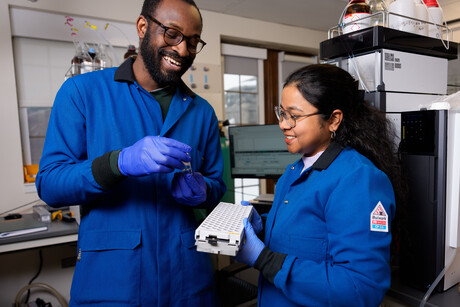
Researchers in the lab of Assistant Professor Chibueze Amanchukwu at the University of Chicago Pritzker School of Molecular Engineering (UChicago PME) have spent three years looking for failure, scouring academic literature for tales of battery breakdowns and degraded electrolytes.
Working with researchers from Northwestern University, the UChicago PME team turned the conditions that unfortunately degrade battery components into a new, powerful technique for intentionally degrading the water pollutants known as per- and polyfluoroalkyl substances, or PFAS.
“If somebody complains, ‘Oh, this compound degrades in this manner and leads to a poorly cycling battery’, we get excited about that,” Amanchukwu said. “Because we can flip it around for PFAS degradation.”
The research findings, published in Nature Chemistry, show remarkable results in breaking down the long-chain PFAS molecule perfluorooctanoic acid (PFOA) into mineralised fluorine without forming short molecular chains that can be even trickier to remove from water. This new fluorine source can be used to create PFAS-free compounds, turning pollutants into valuable commercial products.
“We achieve about 94% defluorination and 95% degradation. That means we break nearly all the carbon–fluorine bonds in PFAS,” said first author Bidushi Sarkar, a UChicago PME postdoctoral researcher. “We are mainly mineralising and pushing complete breakdown of PFAS instead of just chopping it into shorter fragments.”
As researchers across the globe build ways to destroy the tenacious PFAS molecules through UV light, high temperatures, plasmas, plastic-hungry microbes or other means, this new work sees electrochemistry — the dance between electricity and molecular bonds — joining the fight.
“The reason people love electrochemistry is that it is quite modular,” Amanchukwu said. “I can have a solar panel with batteries, and I can have an electrochemical reactor on site that is small enough to deal with any local waste streams. You don’t need a large plant that operates at high temperatures or high pressures, which are in some of the systems that people are trying to build today.”
Stubborn chemicals, a stubborn question
PFAS are a class of thousands of durable, resilient chemicals used in products including firefighting foams, raincoats, non-stick pans and even the lab coats the team wore during the research. But that durability makes PFAS so difficult to remove from ground, surface or drinking water that they’ve earned the nickname ‘forever chemicals’.
“All of these properties — fire resistant, water resistant, oil resistant — are because of these strong carbon–fluorine bonds in PFAS,” Sarkar said. “These properties that make PFAS so useful are also what make them so difficult to degrade.”
This PFAS research marks new ground for UChicago PME’s Amanchukwu Lab, which focuses on designing electrolytes for the batteries and electrocatalytic reactors needed to transition the planet off fossil fuels. But after conference presentations and other lectures, Amanchukwu, Sarkar and their team members kept getting questions about a different environmental concern.
“No exaggeration, when I would give talks, I guarantee you a question I would get at the end would be ‘Professor, why are you making more forever chemicals?’” Amanchukwu said.
While the Amanchukwu Lab is pioneering PFAS-free battery electrolytes, many electrolytes contain PFAS, currently in small amounts and not of the type known to cause cancer or other health problems. Rather than dismiss the question, however, the team flipped it: If PFAS-based electrolytes already degrade in batteries, what can scientists learn from that?
The hunt for failure
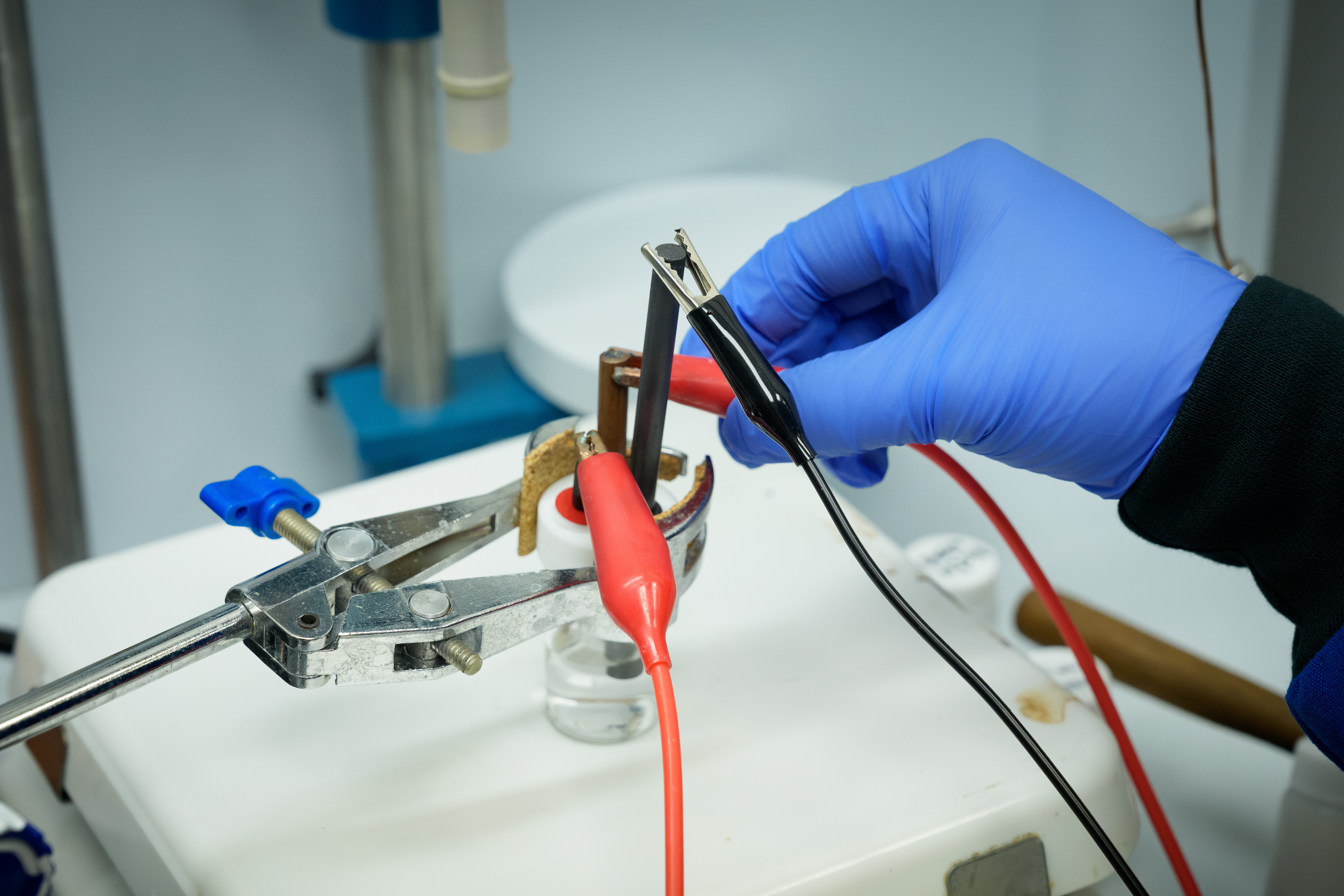
“The electrochemistry is simply putting electrodes into a solvent,” said Northwestern University Chemistry Professor George Schatz, a co-author of the new work. “If you have these molecules dissolved into solvents, and then you pass current from the electrodes through the solvent, Chibueze and his team developed a scheme where that destroys the PFAS.”
Just zapping water isn’t enough. Breaking down PFAS by oxidising them — removing electrons until the bonds linking the atoms become unstable — is difficult because of fluorine’s chemical properties.
“Fluorine is the most electronegative element, so it really loves electrons,” Amanchukwu said. “This makes oxidising fluorinated compounds hard to do. It is much easier to reduce them.”
Trying to reduce the compounds — adding electrons until the bonds become unstable — kept reducing the surrounding water instead, breaking the water down into hydrogen and oxygen. Studying papers showing PFAS unintentionally degraded in water-free battery electrolytes led to a new plan.
“Our innovation here was working with non-aqueous electrolytes that have high reductive stability, such that when we add a fluorinated compound to it, it’s the fluorinated compound that is reductively degraded,” Amanchukwu said. “That has been the breakthrough that has made this possible.”
Treating copper electrodes with the lithium commonly found in batteries finalised the new procedure. Applying their success with PFOA to other members of the massive ‘forever chemical’ family proved promising for future work. Of the 33 PFAS compounds tested, 22 demonstrated degradation amounts exceeding 70%, with some degradation up to 99%.
“People have done electrochemistry for a long time,” Schatz said. “If it was easy, it would have already been discovered.”
Bypassing weak cells could extend EV battery pack lifespan
Reconfigurable EV battery packs could last longer by bypassing weaker cells, with modelling...
Perovskite solar cells take flight for testing in space
Next-gen perovskite solar cells are heading into space aboard the CRIMSON-1 satellite, where...
Perovskite thin film powers devices using indoor light
Researchers have improved perovskite thin films, helping indoor photovoltaics capture light while...